
Dara has a flight to catch. She's done this a hundred times—the same terminal, the same gate, the same ritual of moving through a space designed to funnel millions of people through as efficiently as possible. She knows every beat of it. That's exactly why today is strange.
She's noticing things she stopped noticing years ago. Or maybe noticing their absence.
Signal One: The Living Battery—Researchers in Switzerland have 3D-printed a functioning battery powered by baker's yeast and white-rot fungus. The result is a fuel cell capable of powering small Bluetooth sensors. It can be stored dry, activated when the package is opened, and left to biodegrade after use. The development is a direct response to a growing e-waste crisis.
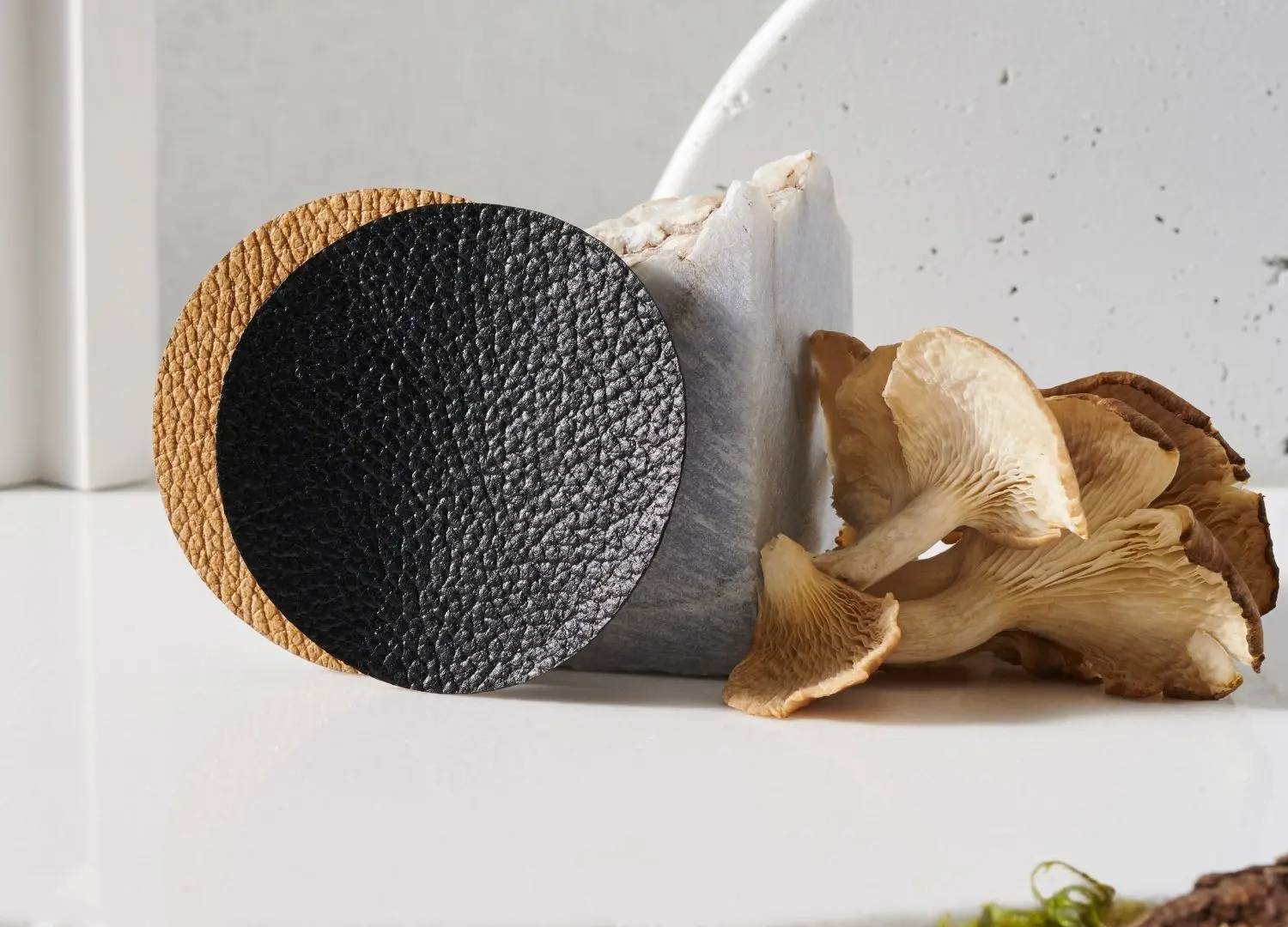
Signal Two: Mycelium Leather—Two California companies are growing leather-like materials from fungal root networks fed on organic waste. The result closely mimics the look, feel, and durability of traditional leather at a fraction of its environmental cost. What makes this signal significant isn't the material, it's that Hermès used it to produce its Victoria Voyage travel bag range. Stella McCartney, Adidas, Gucci, and Lululemon followed.
Signal Three: The Biodegradable Earplug—For fifty years, disposable foam earplugs have solved a human comfort problem while creating a planetary one: billions of plugs discarded annually. A biomaterials company now cultivates earplugs from mycelium that are compostable, equivalent in noise reduction, and super soft. Rather than asking consumers to change behavior, they changed the material and embedded it into existing distribution systems, partnering with venues to replace plastic plugs at events.
Each signal represents a shift from one material to another:
The question the signals don’t answer is: who owns the organism the material is made from?
Here’s what that mushroom revolution looks like when it arrives and who gets to experience it.
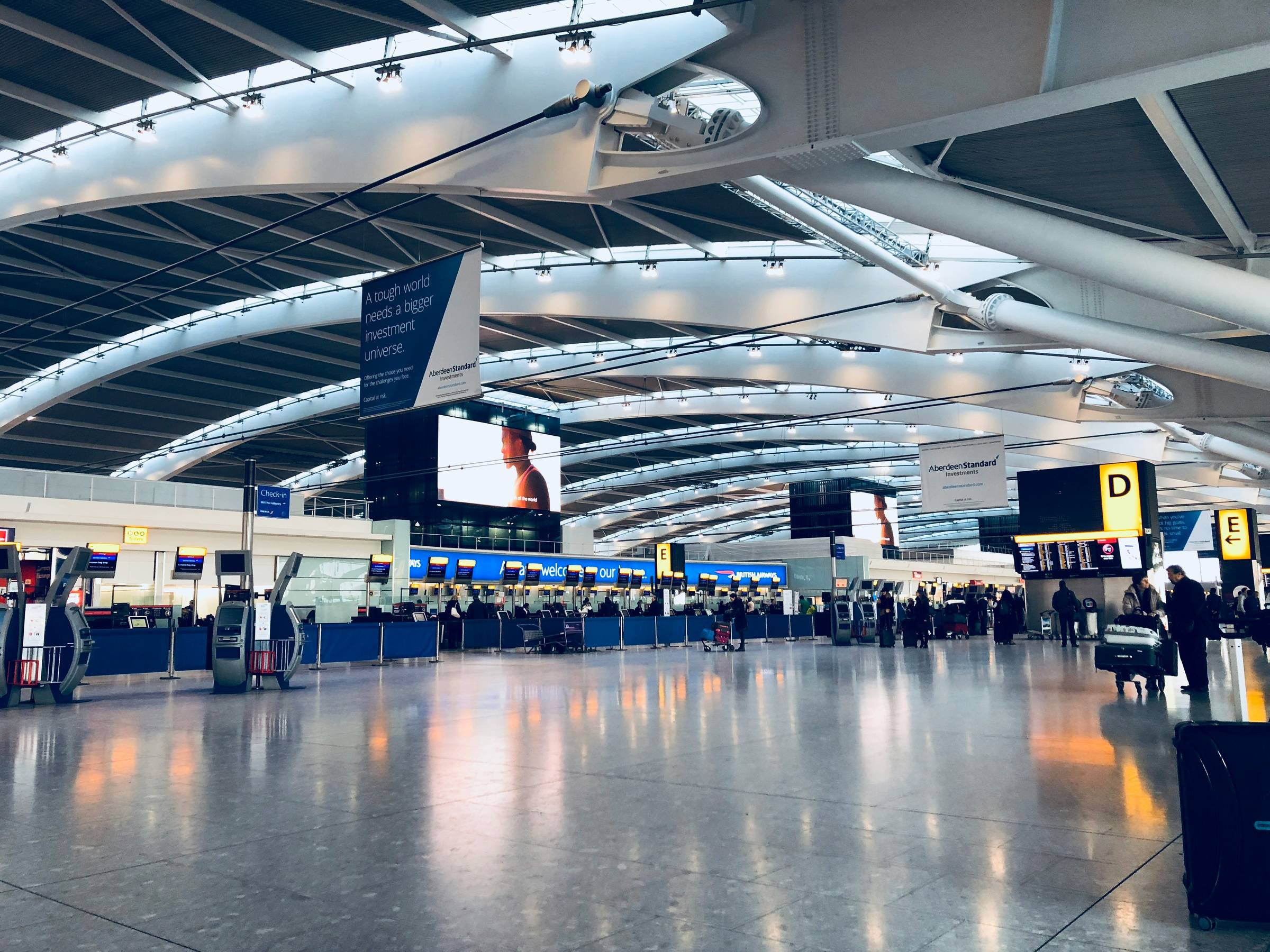
Dara remembers airports from 2019. The hard plastic seats bolted to the floor. The neck pillows shrink-wrapped in crinkly cellophane. Overflowing trash cans every fifteen feet. A space designed to move people through it and leave everything else behind.
She’s in the same terminal she flew out of seven years ago. The bones are the same. But the texture has shifted—quietly, the way a neighborhood changes and you only notice when you visit after a long time away.
There are fewer bins and most of them say Compost. The neck pillows in the Hudson News near her gate come in paper sleeve packaging with a small line: Made from mycelium foam. Composts in 90 days. She picks one up. It’s softer than she expected, slightly warm from the shelf—or maybe she’s imagining that. She puts it down. Picks it up again. Buys it.
By 2035, “grown” will be a product category the way “organic” became one—first niche, then premium, then table stakes. The question is whether the biology underneath the label stays genuinely alive, or gets industrialized into the same monoculture it was meant to replace.
The e-waste crisis forces the hand
When more and more devices are manufactured annually (for use in food, medicine, logistics, and aviation) meets the impossibility of recycling them all, biology stops being a research curiosity and becomes a requirement. The living battery will be adopted not because it’s elegant but because the alternative is a regulatory and logistical catastrophe. Crisis does what decades of advocacy could not.
The luxury signal cascades down
The pattern with mycelium leather is the same pattern that played out with organic cotton, recycled polyester, and plant-based meat: luxury validates, mid-market scales, mass market follows. Hermès was not the destination—it was the luxury validation. Within a decade, grown materials will appear at every price point because consumers already have the expectation, and brands are playing catch-up to it.
The flight attendant moves through the cabin with a tray of headphones sealed in small paper folds, like origami. Not the hard plastic clamshells Dara grew up opening and immediately losing. She takes a pair. They’re roughly the shape of AirPods but a warmer color and the surface has a faint texture she associates with something grown rather than molded.
There’s no wire. The pods pair automatically to the seat screen when she puts them in. The power comes from a microbial cell embedded in the housing—a living battery, activated when the package is opened, good for about eight hours. Enough for the flight. After that, the biology winds down, the signal drops, and the pods go into the return basket.
The meal arrives with cutlery made from mushrooms and a pressed mycelium tray liner, molded to cradle each component. Afterward, the flight attendant collects the tray into a segmented bin.
Dara used to notice waste—the crinkle of wrappers, the snap of plastic lids, the clatter of everything going into the same bag. She stopped noticing it at some point because noticing it became too much. It was everywhere, and there was nothing she could do about it in the moment. She doesn’t know exactly when the feeling in her chest started to loosen.
Behavior doesn’t change—infrastructure does
The headphones returned to the basket. The tray the flight attendant sorts. The bins in the terminal that say Compost. None of these requires anything from the person holding the object. The substitution happens upstream. The behavior stays the same. This is the only model that scales: not asking people to care more, but designing systems that make care the default.
The deeper shift: from artifact to organism
The 20th century manufactured objects designed to be stable, uniform, and permanent—materials that would not change, decay, or surprise you. What the mycelium signals point toward is an inversion of that logic. The objects of the next decade are grown, not made. They age. They biodegrade. In some cases, they are literally alive. That is not a compromise. For the first time in a century, it is the point.
When engineered biology powers the material world, companies owning engineered organisms uniquely control the supply chain. Factories can be replicated, but patented fungal strains can’t be. Two companies dominate the mycelium leather market, and the living battery’s commercial applications will belong to the licensor.
As grown materials scale, biological intellectual property will be a defining tension of the next decade. The history of agricultural IP—from seeds to livestock breeds—should caution us about celebrating the democratization of a technology whose ownership structure is still private.
She moves through baggage claim. Her carry-on, bought three years ago, is mycelium composite—a bio-design collaboration she'd never heard of when she bought it. She chose it because it was well-reviewed and the price was fair.
Outside, the air smells like jet fuel and rain. She thinks about a trip in 2019—the neck pillow sealed in plastic under the seat, the hard tray snapping in half when the person in front reclined. Everything passing through, discarded, replaced.
She doesn't feel like she's arrived in the future. It feels more like the present has caught up with something that was always possible. Like the world remembered a thing it had been meaning to do.
She gets in the car. Her bag fits neatly in the trunk. She doesn't think about it again.
The direction is already legible. The organisms are already growing. What happens in the next five years will determine whether this is a genuine material revolution or a very elegant rebrand.
In product and manufacturing, grown materials are moving from proof-of-concept to procurement reality. Companies that build biodesign supplier relationships now—before scale forces the issue—will have options late movers won’t. But “biological” is not automatically “better.” Due diligence on IP ownership and genuine biodegradability will become as standard as any other materials audit.
In retail and brand, the luxury validation has already happened. The question is no longer whether grown materials appear at mass market, it’s when, and on whose terms. The brands that will matter in ten years are the ones who can tell a true biological story, not a marketing one. The consumer who learned to read an organic label is learning to read a mycelium one. They will notice the difference.
In policy and mission-driven work, the infrastructure gap is the urgent problem. Material substitution is outpacing the composting and disposal systems that make the promise real. Labeling standards, composting infrastructure, and biological IP frameworks are being written right now, largely without public participation. The organizations paying attention to that story will have something urgent to say and credibility to say it.
The fungus has been in the soil for 1.3 billion years—quietly breaking down the world’s waste, transmitting nutrients between trees, fruiting in unexpected places longer than anything else currently alive on Earth.
The question the next decade answers isn’t whether we’re ready to grow things differently. It’s whether we’re ready to understand that the organism has always been doing the work—and build a material world humble enough to let it.
Sources: The mushroom revolution that’s bringing change, Biodegradable Noise-Cancelling Mycelium Earplugs Are Solving A Decades-Long Plastics Problem, Scientists 3D print tiny living battery that self-destructs after use