
The vocal coach who figured out the internet (and what it means for your audience)
Ever notice how some organizations act like their industry exists in a vacuum? Like if they just talk about their own expertise, in their own corner of the internet, their audience will show up and pay attention forever?
Your audience doesn't live in a vacuum. They have other interests, other obsessions, other things they're paying attention to. The organizations that actually grow their reach tap into that. The ones that don't, wonder why their content never breaks out of the same small circle of people who already knew about them.
A quick story that has nothing to do with brand strategy, and everything to do with it
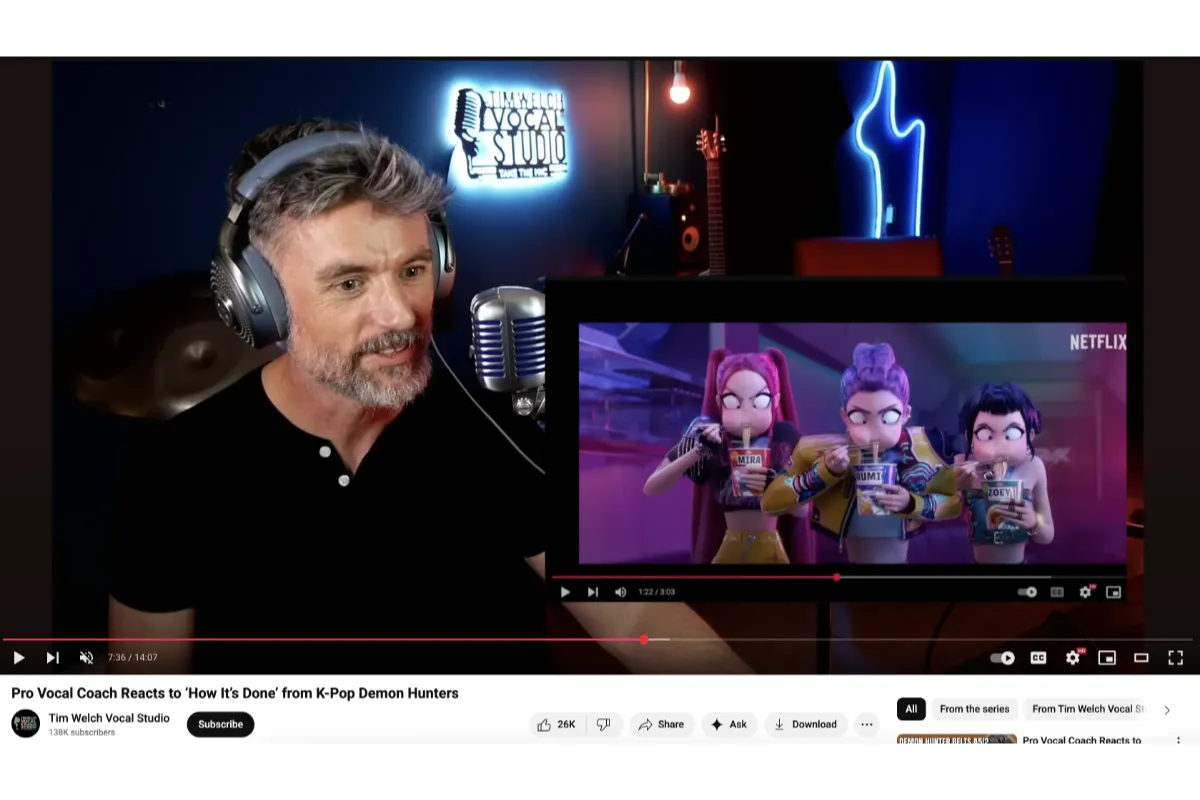
There's a vocal coach named Tim Welch who's been teaching singing for 25 years. He could fill his YouTube channel with technique breakdowns and student before-and-afters — the expected content for his field.
Instead, he makes reaction videos. He breaks down songs from every genre and continent, gasps over impressive vocal ranges, and gets genuinely excited about music that has nothing to do with vocal coaching specifically. His audience suggests the songs.
His channel massively outperforms what a typical vocal-coaching channel would do — because he figured out that his audience cares about music broadly, not just vocal technique narrowly. By showing up in that wider world instead of staying in his expert lane, he reaches people who never would have found a coaching channel on its own.
Here's the part that applies well beyond YouTube
Most organizations fall into what I'd call echo chamber thinking — only talking about their own expertise, to people who already know about their expertise. It's safe. It's also a ceiling.
The alternative is asking a different question entirely. Not "how do I get more people interested in what we do," but "where are the people we want to reach already gathering, and what value can we bring there?"
That's the actual reason this blog exists in the form it does. I write about Bad Bunny's Super Bowl halftime show, a woman who won a bet dressed as the Lorax, and what a $119 box of mangosteen can teach you about audience psychology — not because Fat Cap is secretly a pop culture commentary site, but because the people I want to reach are more likely to read about Bad Bunny than they are to read another generic post titled "5 Brand Strategy Tips."
What this could look like for your organization
The goal isn't to dilute your expertise by talking about unrelated things. It's to find the door your audience is already walking through, and meet them there instead of waiting for them to find your door first.
P.S. Tim's reaction videos get way more views than traditional vocal coaching content. Sometimes the "indirect" approach to building your audience is the most direct path to growth.